Design Development Archive
This page documents the thinking, exploration, and decision-making that shaped Penny Pal during the early stages of the project.
It includes:
Not every concept presented here made it into the final product. Some ideas were tested and discarded, while others evolved significantly as the project progressed. Together, they provide a record of the iterative process behind the project and capture the reasoning that informed the final design.
This archive complements the final project page, which presents the refined outcome in a more concise and focused manner. If the final project page shows what Penny Pal became, this page shows how it got there.
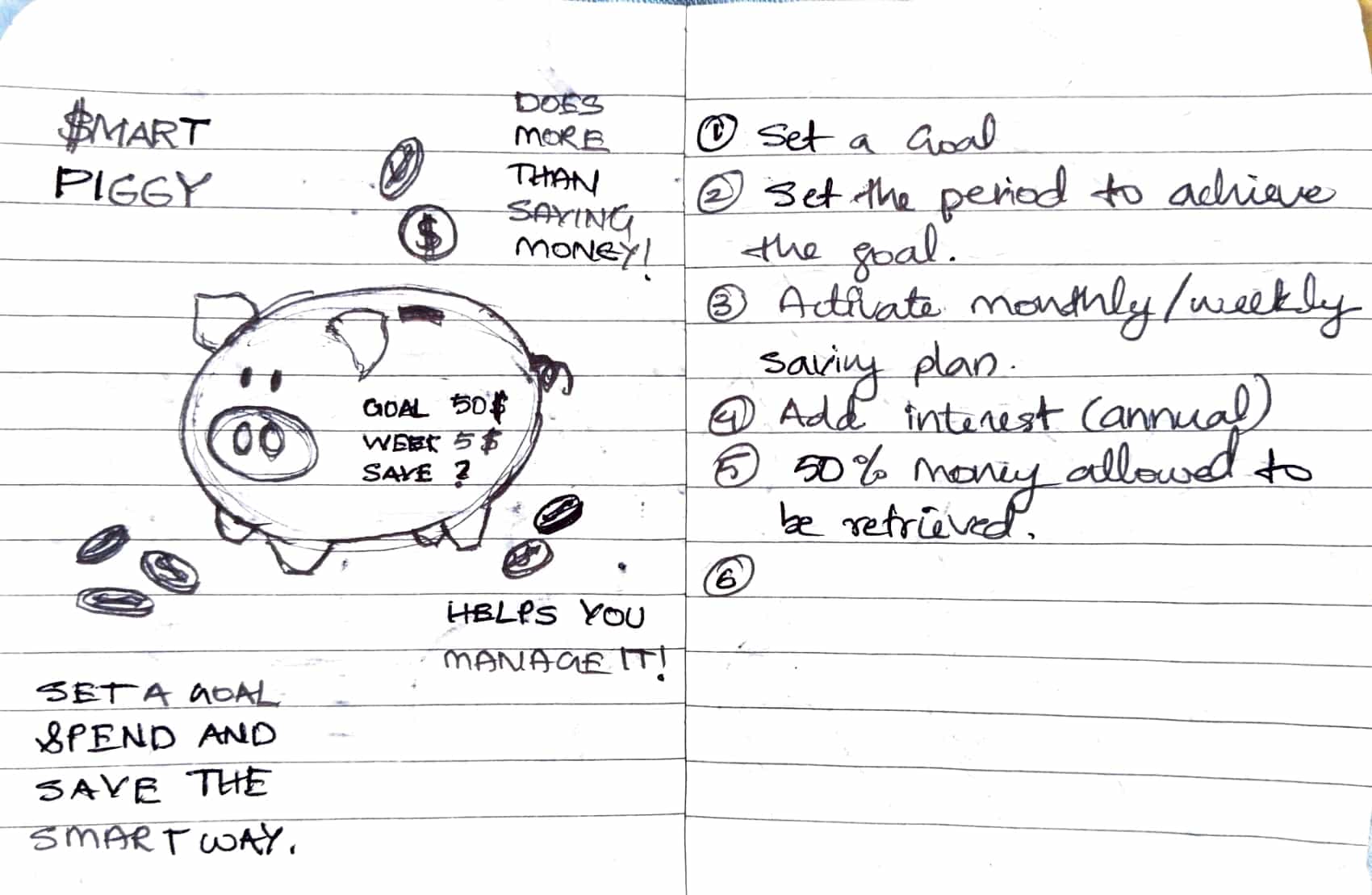
This project explores a Smart Piggy bank System that goes beyond traditional saving to teach children how to save with purpose. While conventional piggy banks and school-led saving schemes encourage putting money aside, they rarely guide children on how to save strategically toward a goal. This project seeks to bridge that gap.
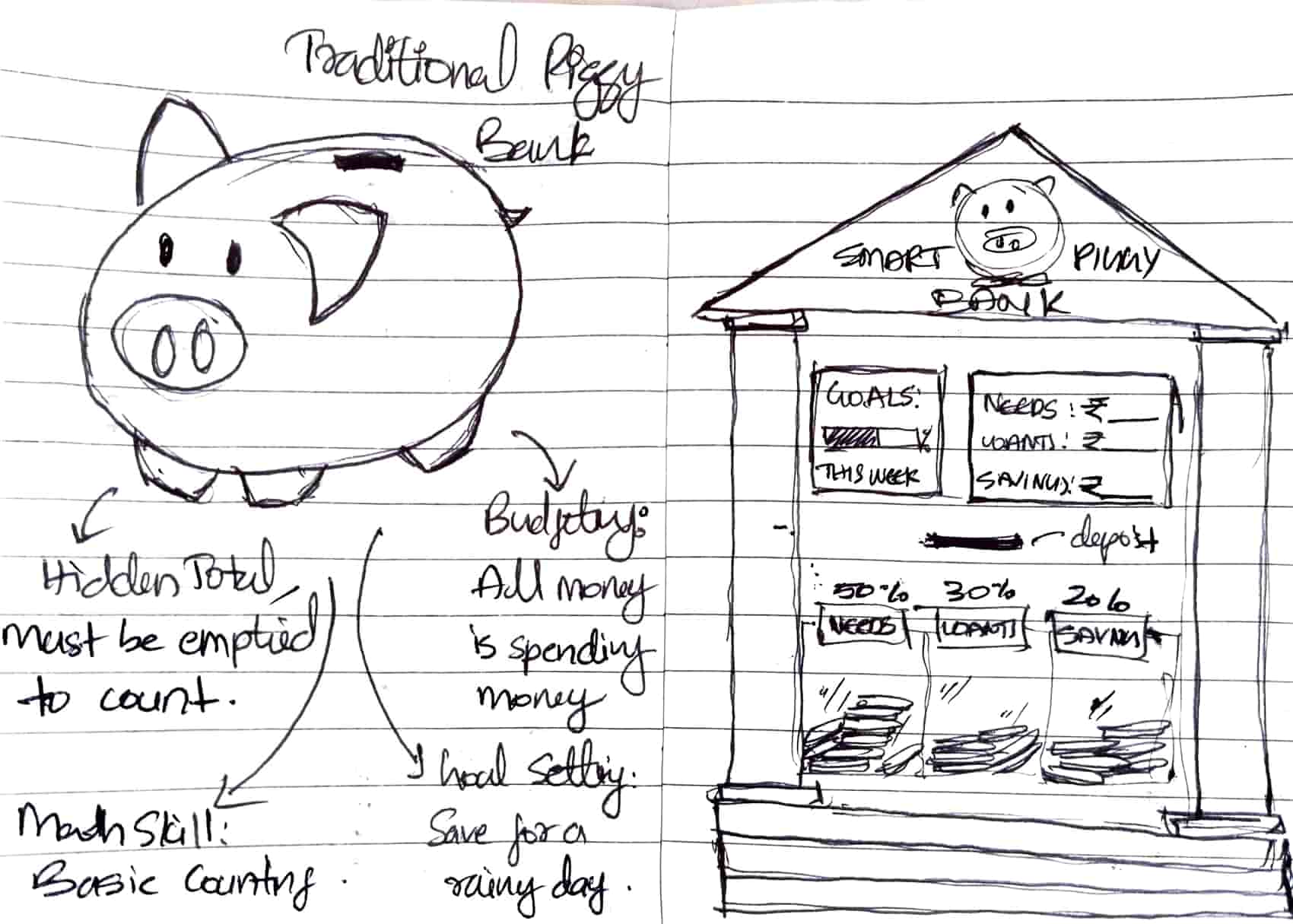
Inspired by how children learn arithmetic through everyday actions like adding coins or calculating change, this concept introduces structured, goal-based saving through interaction. The piggy bank functions as a mini banking system, internally organizing deposited coins to make savings visible and purposeful.
I am currently working with two conceptual approaches. The first is a goal-based model where a child sets a specific savings target and receives weekly guidance on how much to save. The second draws from the simplified 50-30-20 principle, where only a portion of the saved amount is accessible, encouraging discipline and delayed gratification. By combining saving with intention and planning, the piggy bank becomes an active learning tool rather than a passive container.
Concept & Rationale
Children are often told to save money, but rarely taught how to save wisely. Many accumulate coins without a clear purpose, leading to impulsive spending once the money is accessed. This pattern often continues into adulthood. I observed similar contrasts among colleagues on the same payroll-some struggled before month-end, while others managed comfortably. This raised a key question: why does saving feel intuitive for some, but not for others?
This reflection led to the idea of teaching children not just to save, but to save with intention.
In India, physical coin saving is becoming increasingly rare. UPI has made transactions invisible, fast, frictionless, and abstract. But for a child learning about money for the first time, that abstraction is a problem. The weight of a coin, the sound of it dropping, the deliberate act of choosing and depositing, these physical moments make money real in a way a UPI transaction never can.
Designing for the Senses
I've noticed that the things children engage with most deeply are rarely the ones that look the most impressive, they're the ones that feel the most alive. The ones that respond, that make sounds, that change when you interact with them.
There's a reason for that. The more senses involved in an action, the more intuitive it feels, the more it holds attention, and the more it is remembered. A single tap on a screen engages almost nothing. But dropping a coin into a slot - feeling its weight, hearing it fall, pressing a button, watching a light change, hearing a voice respond - that's five distinct sensory moments from one small act.
Penny Pal is deliberately designed around this. Every coin deposit is a multisensory experience:
Touch - the weight of the coin, the press of a button
Sound - the coin dropping, the servo opening, the voice feedback
Sight - the progress lights filling up, the celebration flash at milestones
Action & Response - the flap physically opening only after the child makes a choice
This isn't decoration. Each sensory layer reinforces the intention behind the action - you chose to save, the system acknowledged it, and something in the world changed because of you.
That feeling of consequence is what makes saving feel real.
Penny Pal is built around that physicality. The interaction is intentional, not incidental.
The Penny Pal Piggy Bank introduces goal-oriented saving, where a child sets a specific target (with parental guidance) and works toward it through consistent contributions and delayed access to funds. Saving becomes a structured and intentional process rather than simple accumulation.
Through this process, the child learns:
- Restraint and patience
- Delayed gratification
- Foundational financial awareness
- An understanding of planning over impulsive spending
To reinforce positive saving behavior, the Penny Pal Bank rewards the child upon successful completion of a goal by adding a small amount of interest to the saved total, introducing simplified real-world financial principles in an age-appropriate manner. Parents act as facilitators rather than enforcers, guiding reflection and discussion instead of merely controlling access to money.
At its core, this project reimagines the traditional piggy bank as a Smart Piggy Bank, an interactive system that encourages purposeful saving and helps children develop a healthy, intentional relationship with money from an early age.
Vision Statement: Making mundane things interesting. Saving, but fun, intentional, rewarding, encouraging, motivating, with a real sense of achievement.
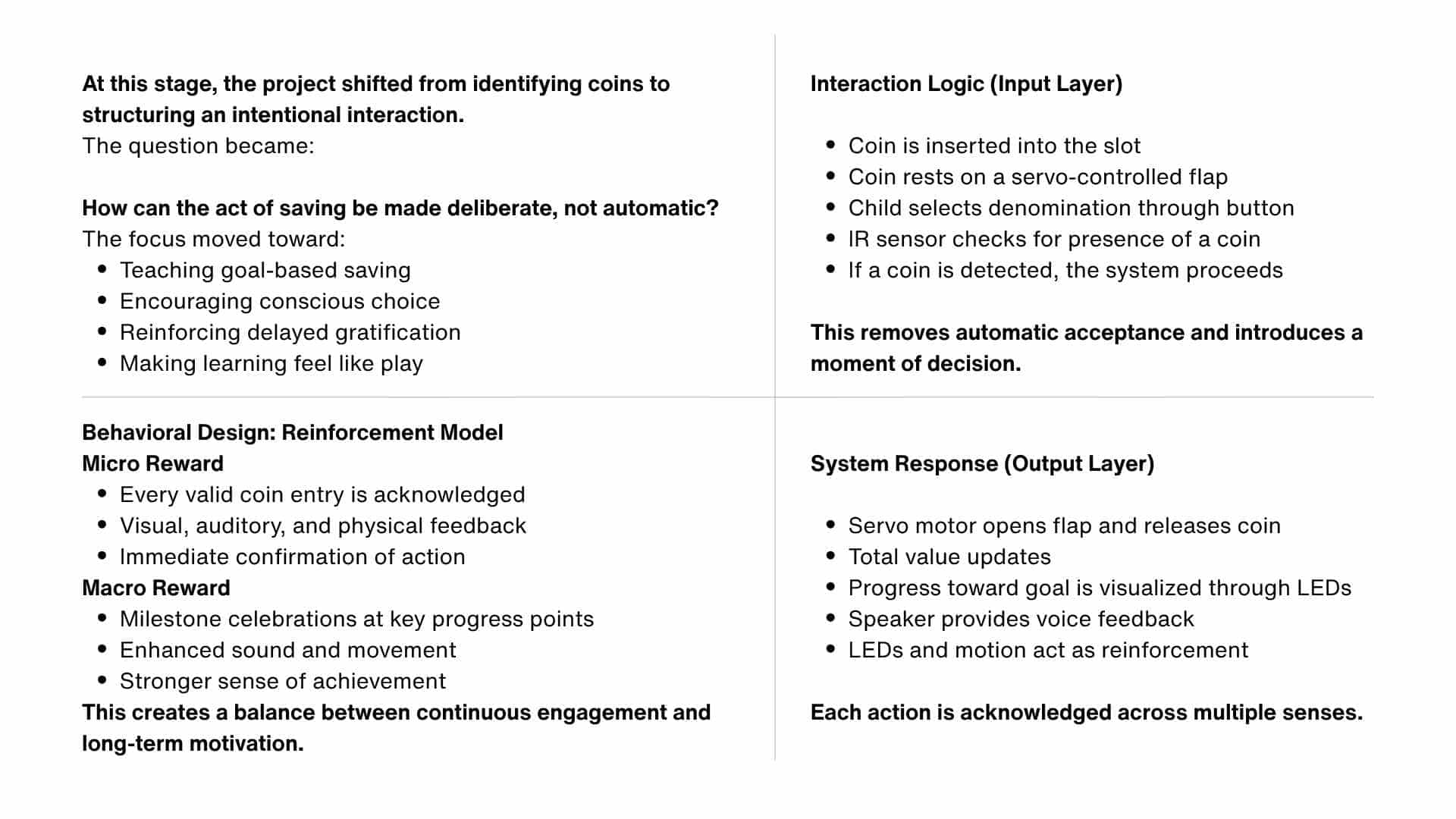
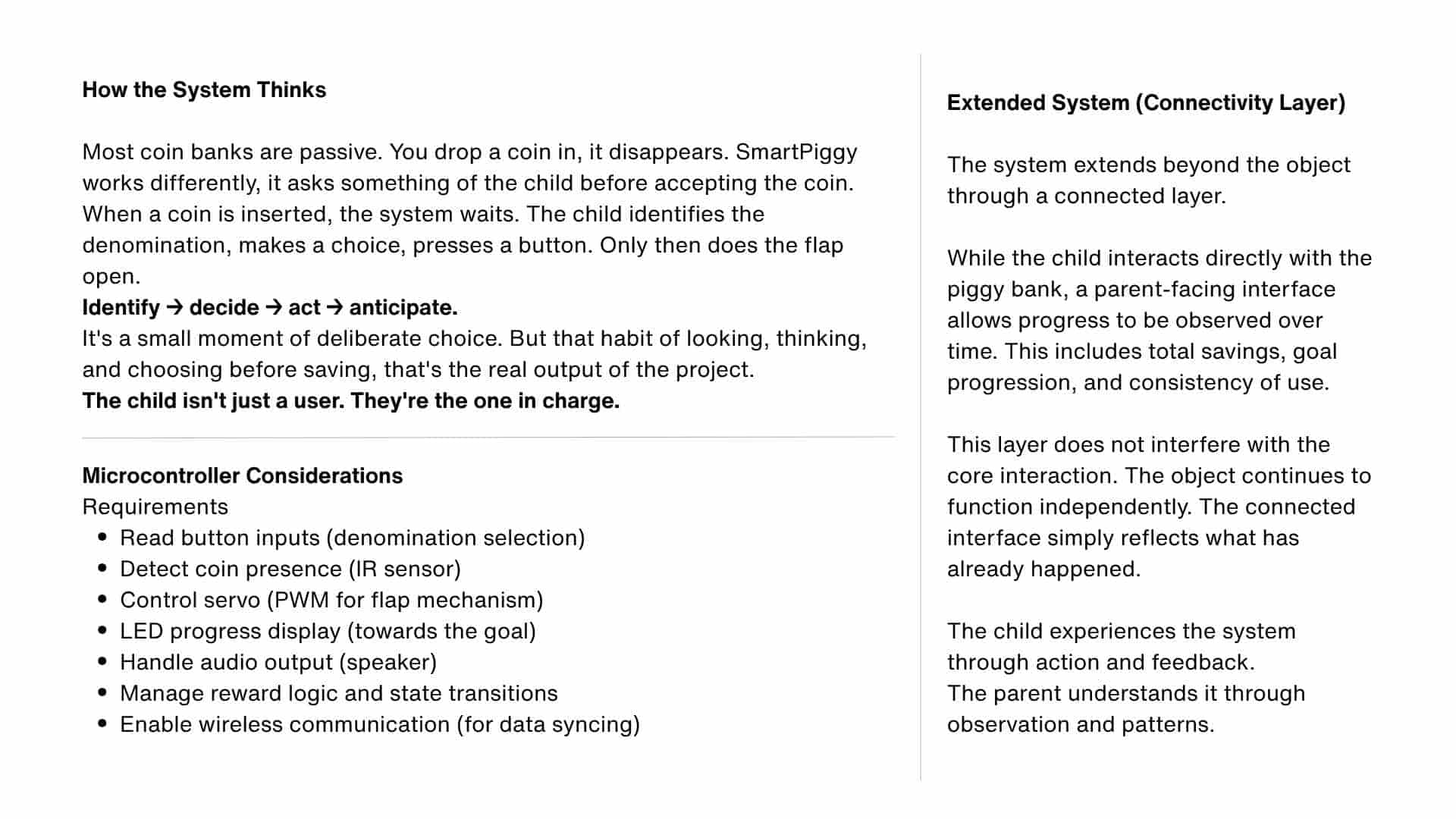
Initial concept model on SketchUp
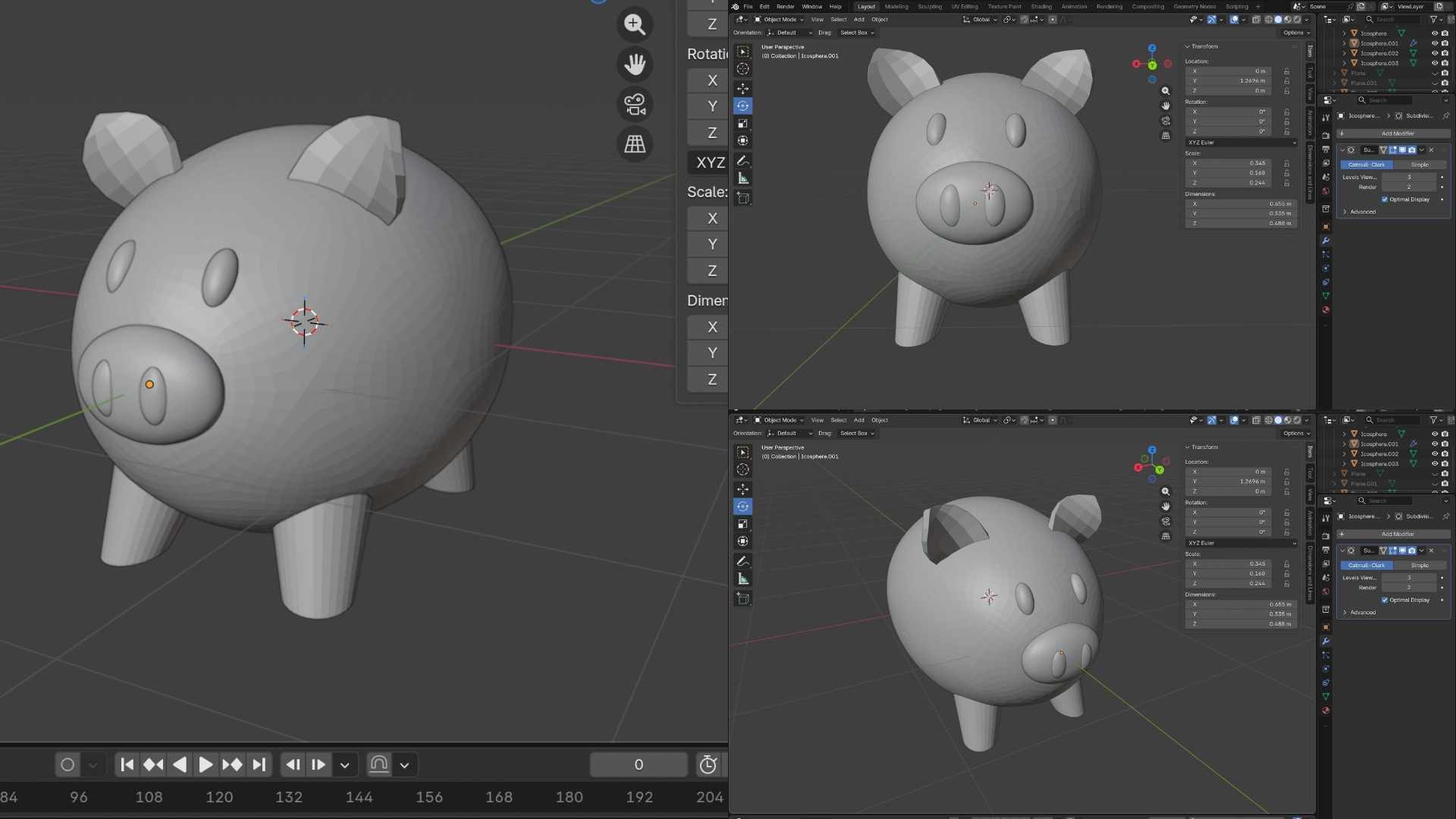
I began with a more architectural approach, where the piggy bank was imagined as a small enclosure. It felt structured and system-driven, almost like a miniature building that housed interactions.
Later, while exploring form in Blender, I moved towards a more familiar and approachable object, a piggy. This shifted the direction. The object started to feel less like a device and more like something a child would naturally engage with.
Now, I am thinking of bringing both these directions together.
The outer form will remain that of a traditional piggy bank, soft and recognizable. At the same time, it will carry elements from the earlier enclosure idea. Buttons and a small display will sit on the surface, making the interaction visible and intentional.
Inside, the system remains structured. A defined coin chamber, the PCB, and the sensing mechanisms are all contained within. So while the outside feels simple and friendly, the inside holds the logic and complexity of the system. It becomes a combination of familiarity and function.
Why a Pig?


While working on this project, a question struck me:
Why are piggy banks shaped like pigs? Why not a Platypus, or an Ostrich, or anything else?
It turns out, it's a happy accident of language. In medieval Europe, a cheap orange clay used to make household pots and jars was called pygg. People stored spare coins in these everyday vessels, which came to be known as pygg pots or pygg banks. Over centuries, as the clay fell out of use, the word remained - and by the time potters were receiving orders for "pygg banks," many had forgotten the material origin entirely. So they did the logical thing: they made them shaped like a pig.The iconic piggy bank was born from a misunderstanding, not intention.
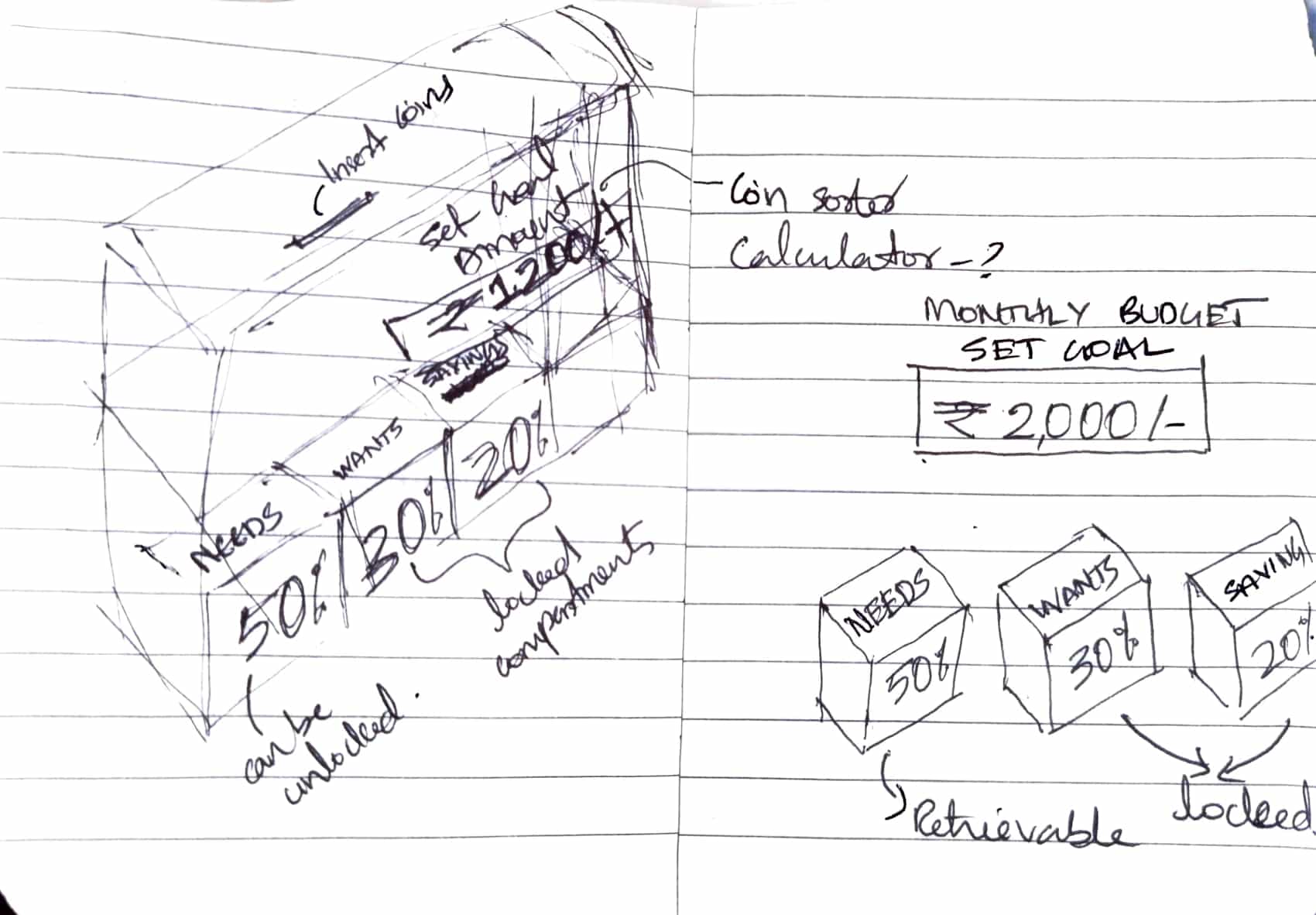
Stage 1 - Coin Sorting for Money Management Training
My initial concept was to design a coin sorting system based on the 50-30-20 money management model. The idea was to:
At this stage, I was thinking mechanically:
However, while mapping this idea to the real objective, I realized: The project is not about managing spending categories. It is about goal-based saving for children. Sorting coins added:
This week helped me identify a mismatch between concept and purpose.
I decided to pivot.
Stage 2 - Shift to Goal-Based Digital Value Tracking
The project evolved from physical sorting to digital value accumulation.
New system requirement:
Detect coin → identify denomination → update total → display goal progress.
This was a conceptual shift from mechanical organization to intelligent tracking.
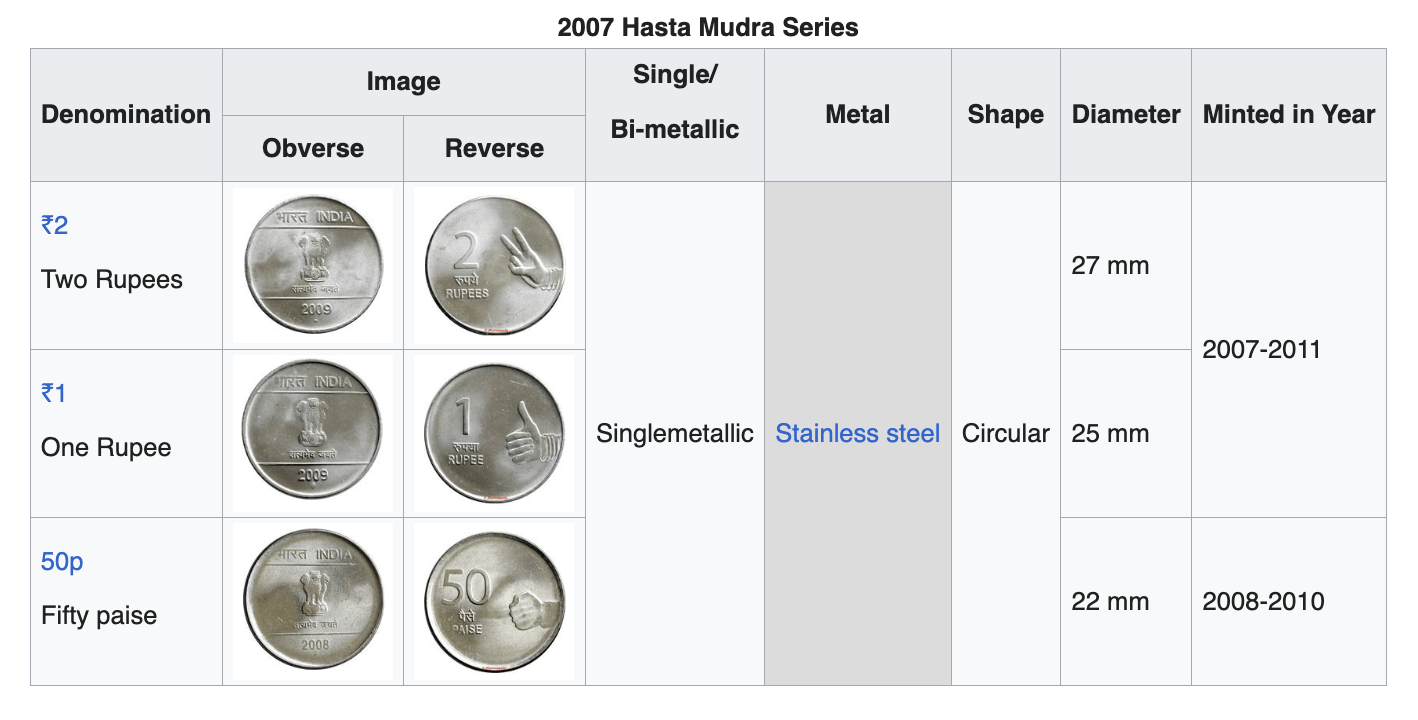
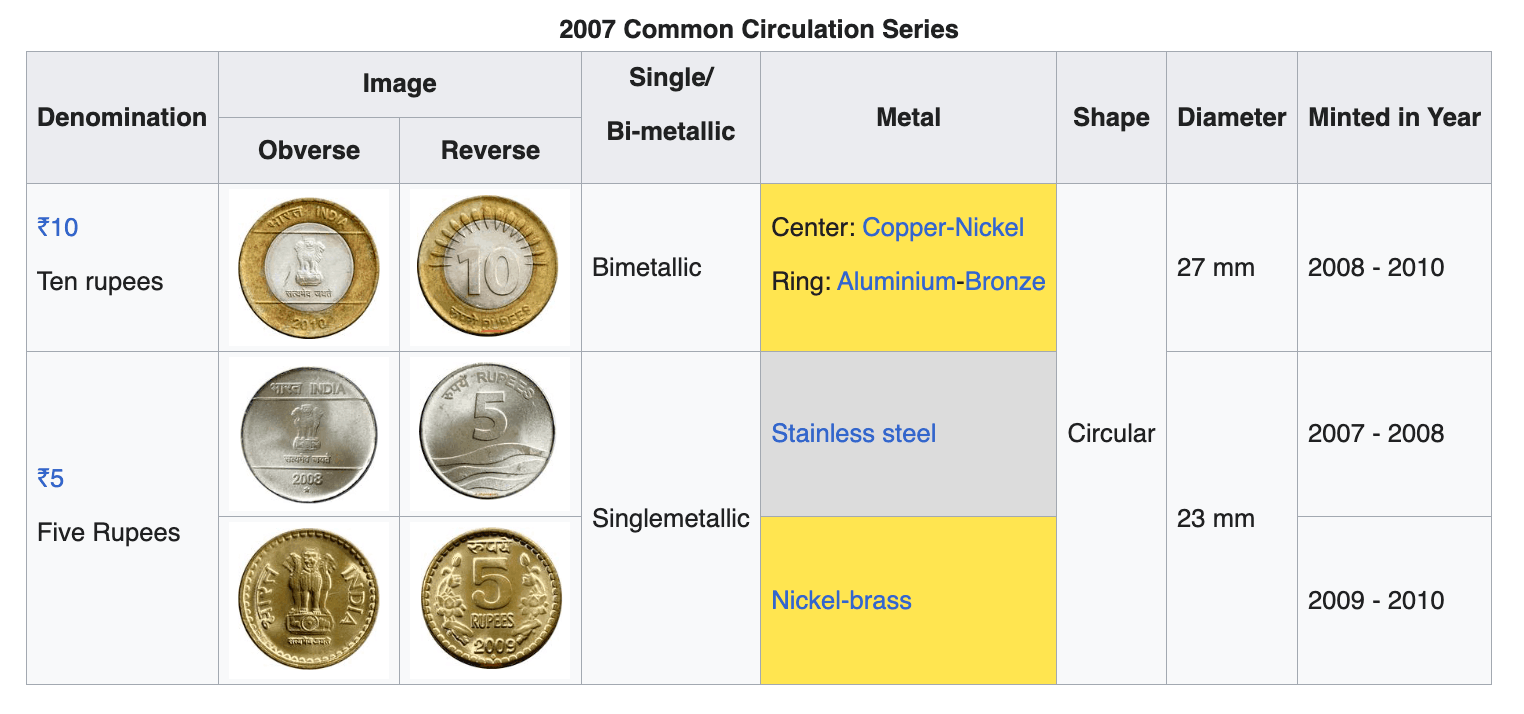
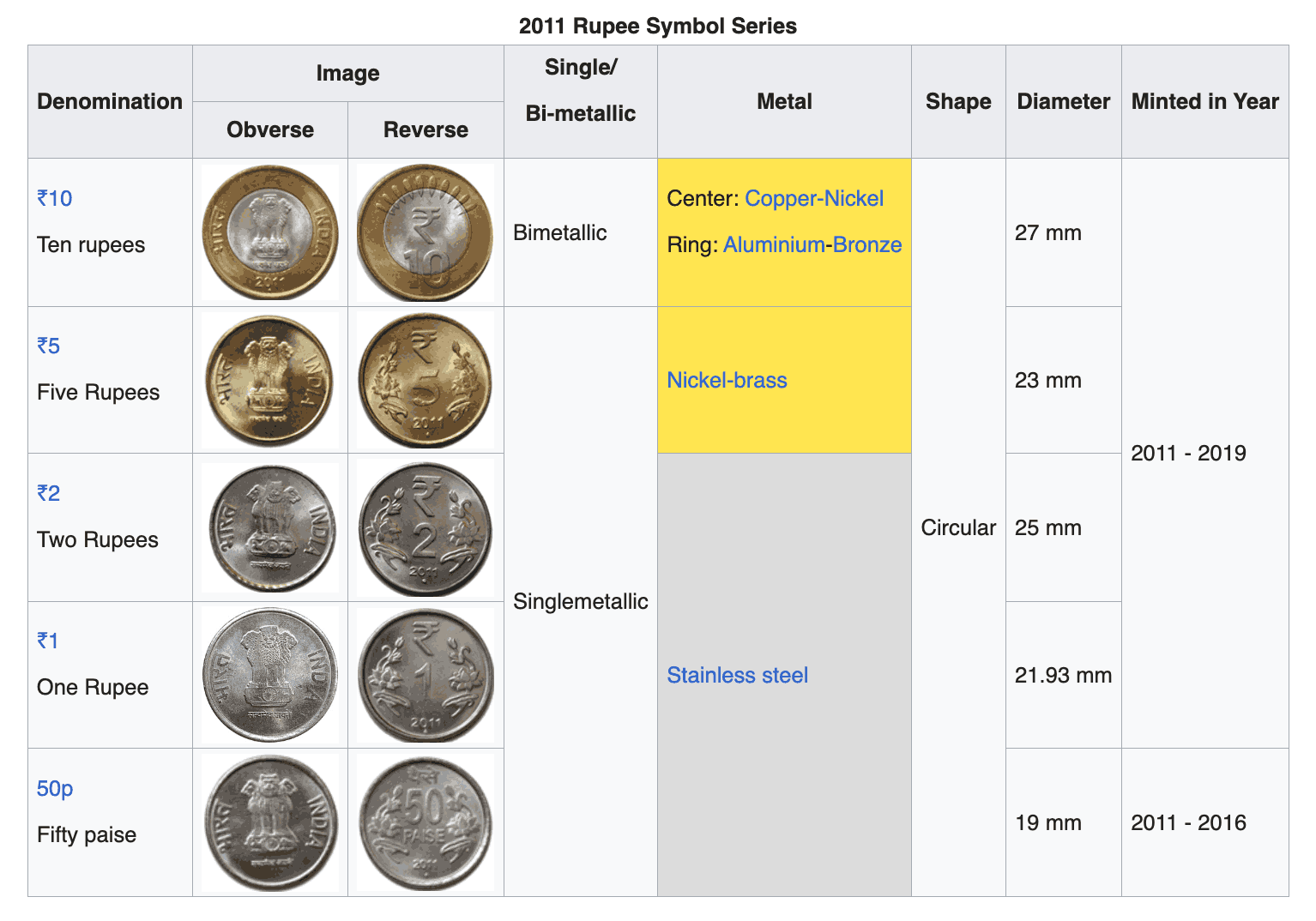
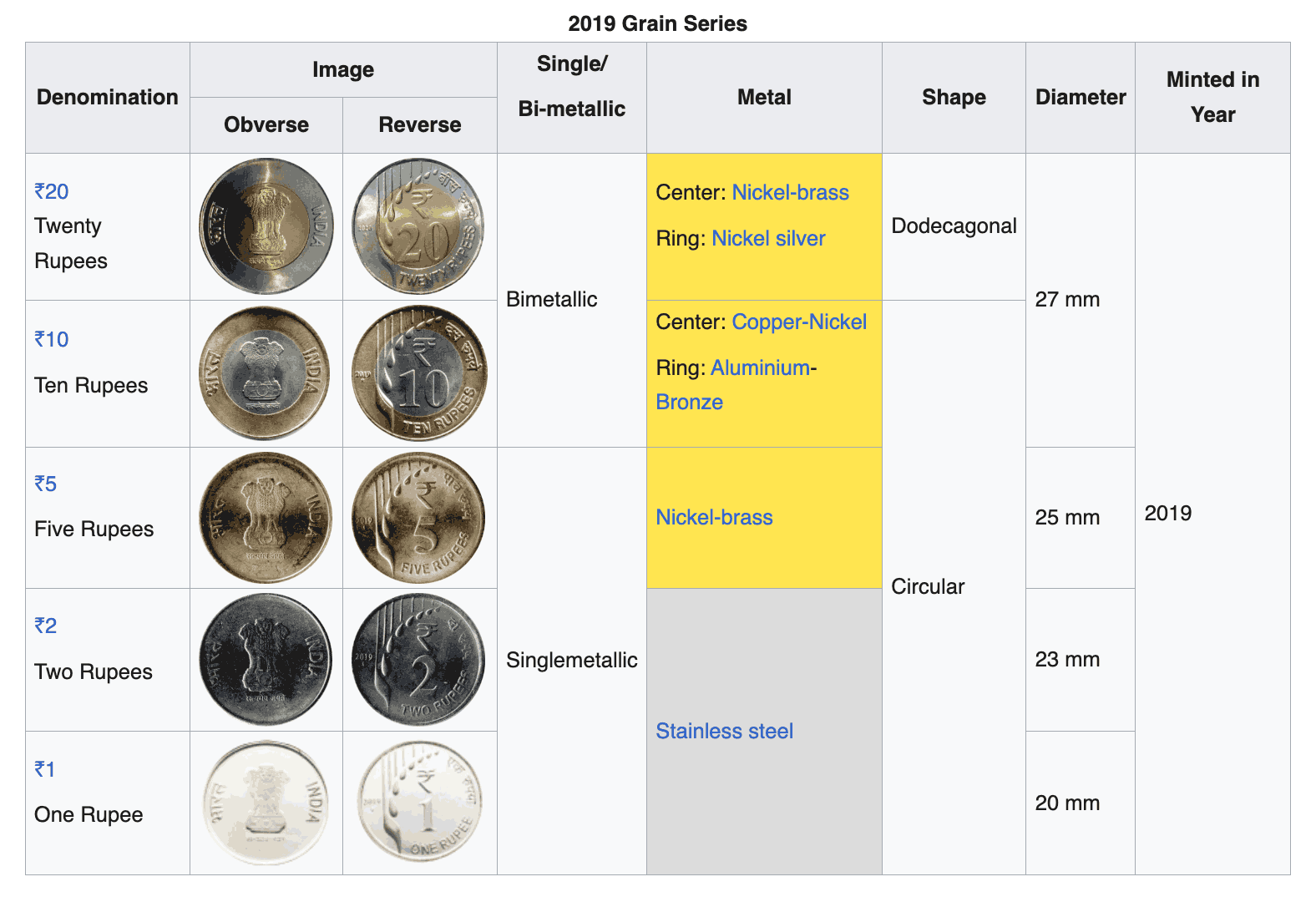
To implement this, I studied Indian coin characteristics:
I discovered that Indian coins are not standardized in a simple way. Different issues of the same denomination vary in material and design. This made denomination detection more complex than expected. This week was about understanding the physical reality of the problem.
Preliminary Diameter and Material Study for Coin Identification System Design
Since my final project involves designing a coin identification system that detects denomination and updates a running total, it was necessary to analyze whether Indian coin denominations are dimensionally consistent across different series. Accurate value computation depends on reliable physical identification; therefore, I first examined variations in diameter and material among commonly circulated coins.
Comparison across models
Source: wikipedia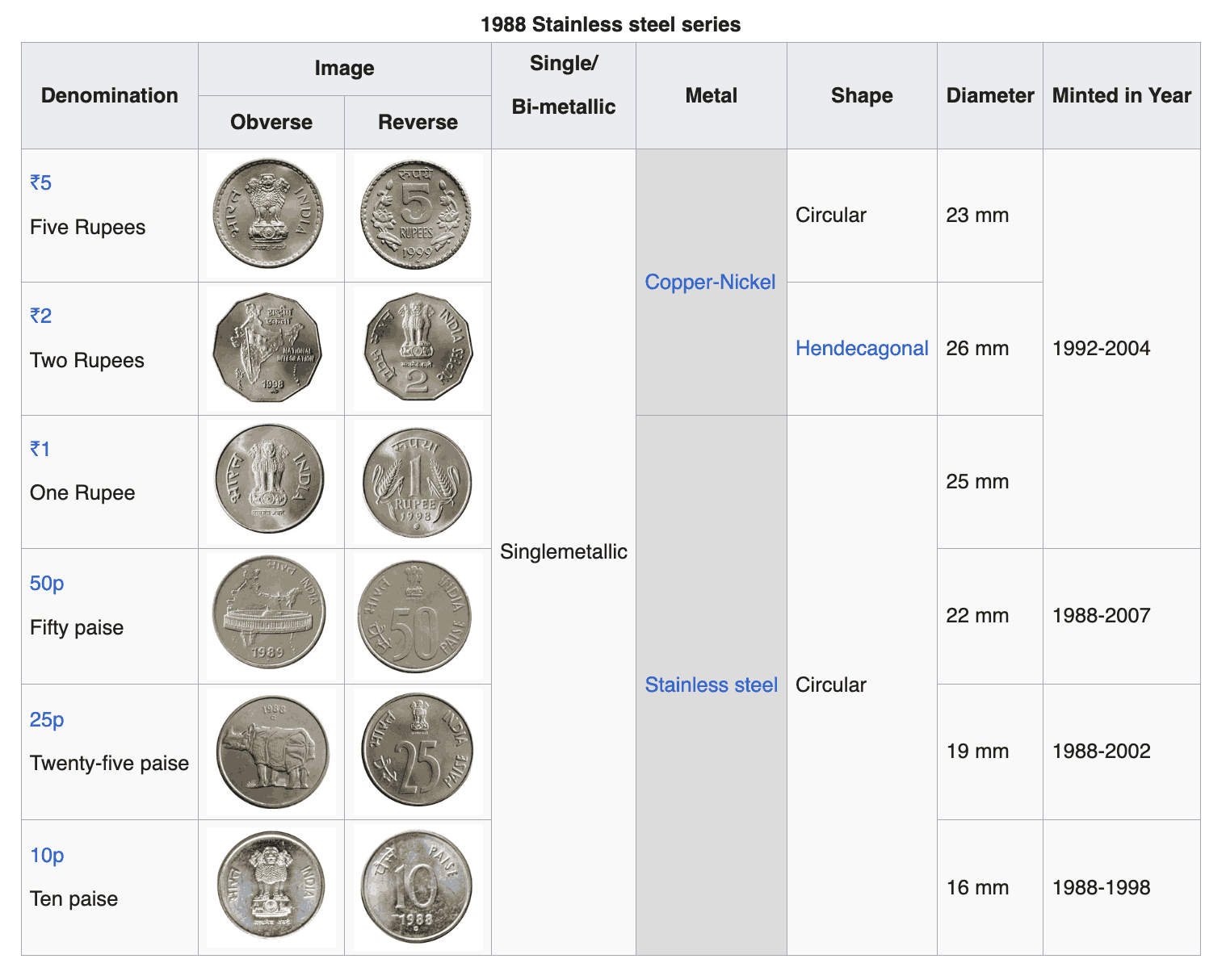
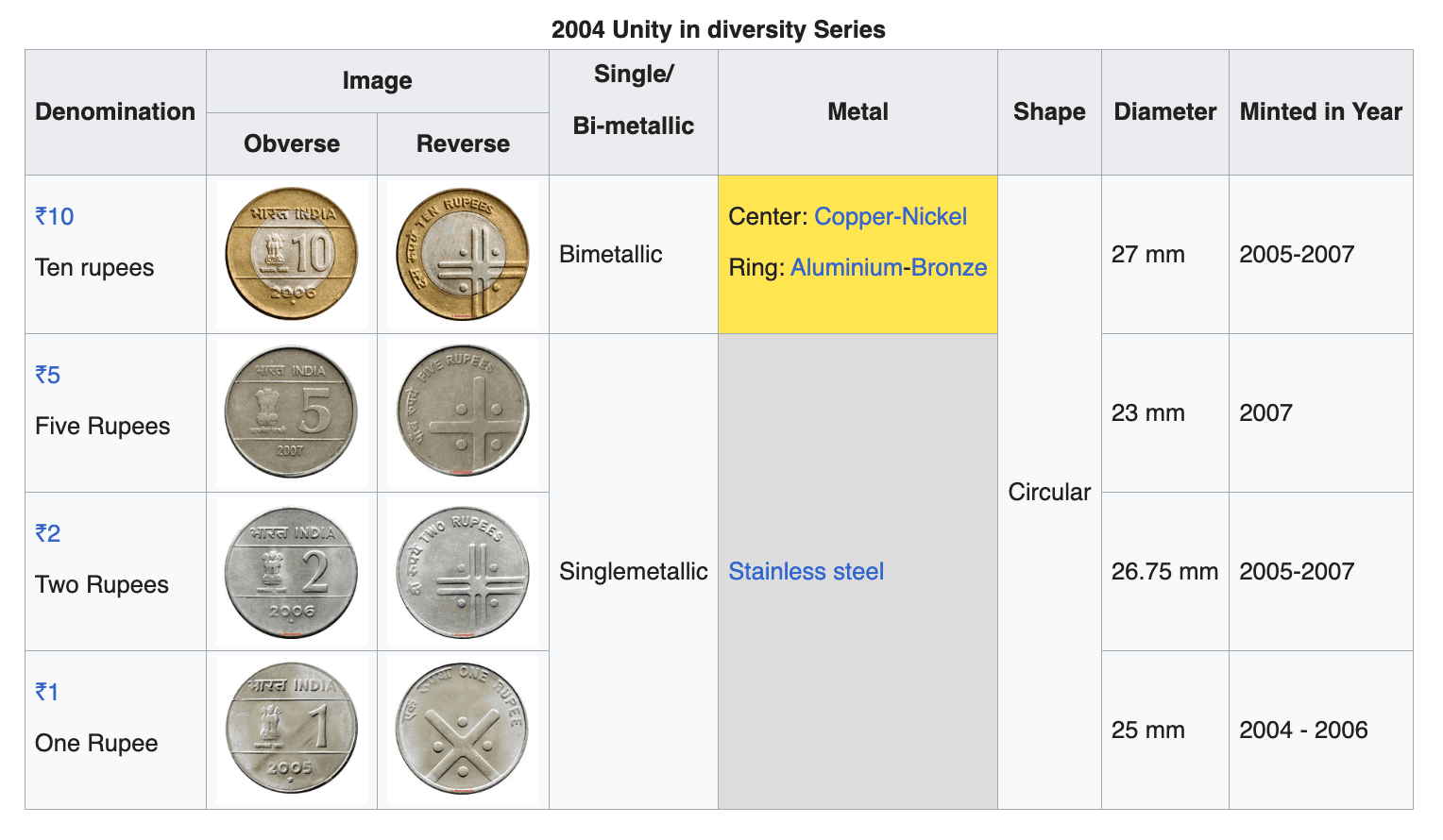
Final Comparison Summary
| Denomination | No. of Varieties | Diameter Range | Materials Used |
|---|---|---|---|
| ₹1 | 5 | 20–25 mm | Stainless Steel |
| ₹2 | 5 | 23–27 mm | Copper-Nickel, Stainless Steel |
| ₹5 | 5 | 23–25 mm | Copper-Nickel, Stainless Steel, Nickel-Brass |
| ₹10 | 3 | 27 mm | Bimetallic (Cu-Ni + Al-Bronze) |
| ₹20 | 1 | 27 mm | Bimetallic (Ni-Brass + Ni-Silver) |
Stage 3 - Understanding Different Sensors & Engineering Trade-offs
After studying the physical parameters of Indian coins, I moved into exploring different sensing mechanisms that could help identify denominations.
At this stage, I was not comparing industrial systems.
I was simply trying to understand:
What sensing approach is technically possible and practical for my context?
Since the project operates in a controlled environment and processes one coin at a time, I evaluated different sensors based on feasibility, complexity, and reliability.
Diameter Detection (Mechanical / Optical)
Measuring the width of the coin either through fixed mechanical slots or using optical sensors (such as IR break-beam) placed at defined spacing.
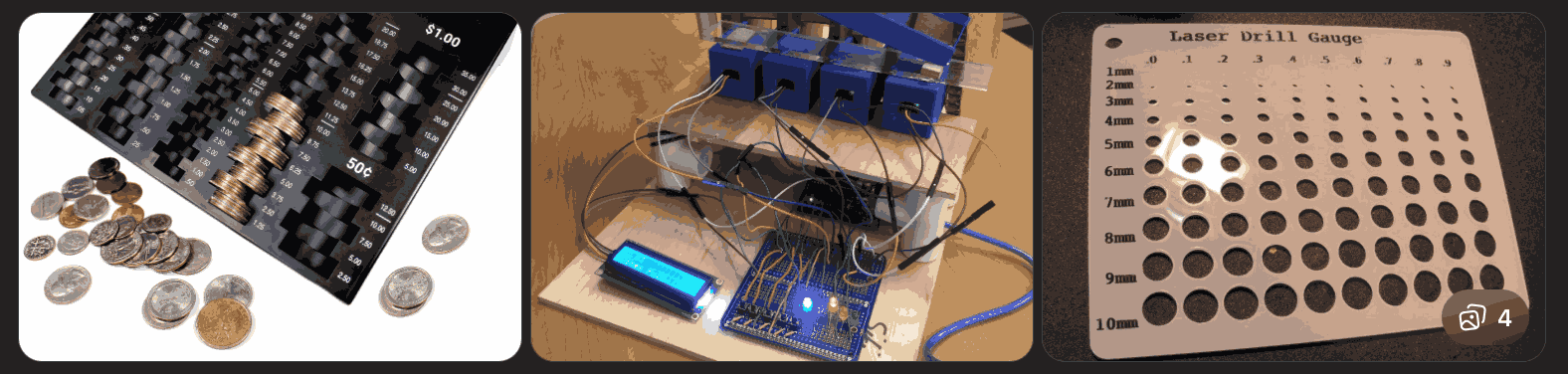
What This Is: A plate or ramp with multiple slots of different widths.
Each slot is calibrated to a specific diameter.
How It Works:
Limitation: Once fabricated, it cannot adapt. If coin size changes, redesign is required. This is purely mechanical detection, no electronics involved.
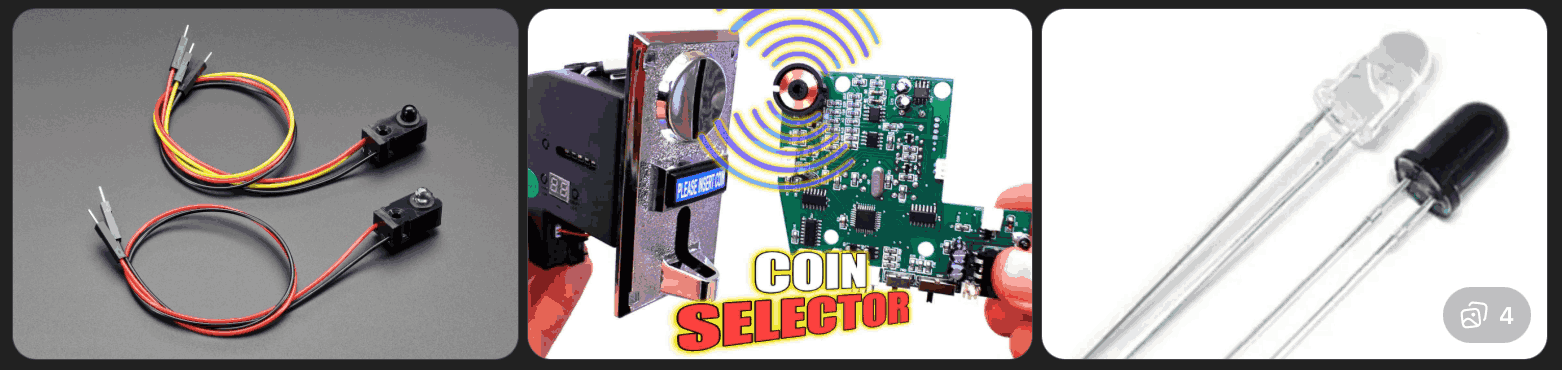
What This Is: An IR LED on one side and a receiver on the other.
When coin blocks the beam → signal changes.
What It Detects:
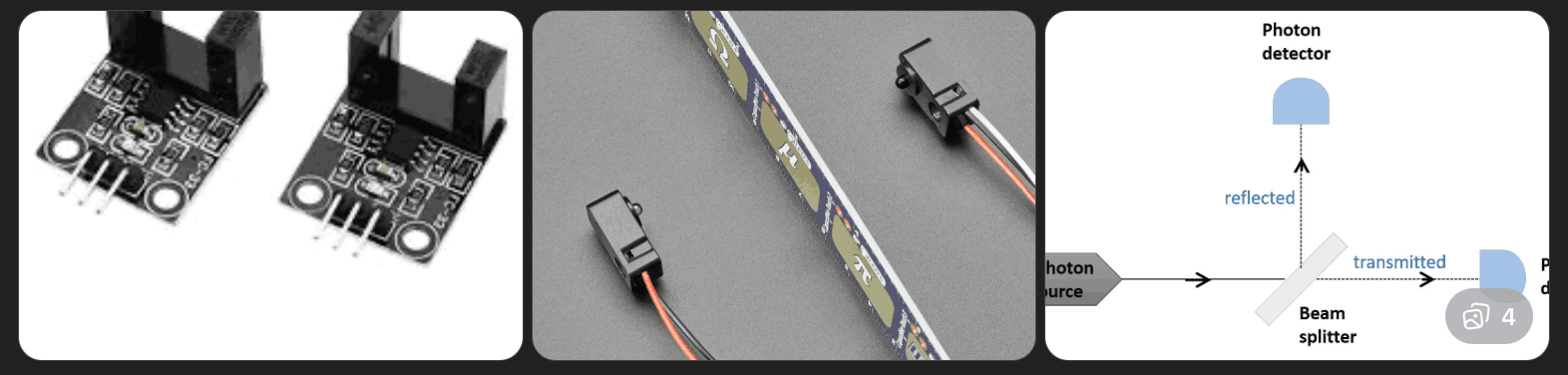
What This Is: Two IR beams placed a fixed distance apart.
How It Works:
Case 1 – Small coin:
Case 2 – Larger coin:
Microcontroller reads:
This allows approximate size classification without physical slot filtering.
Load Cell (Weight-Based Detection)
A load cell measures force using strain gauges. When a coin is placed on it, slight deformation generates a measurable electrical signal.
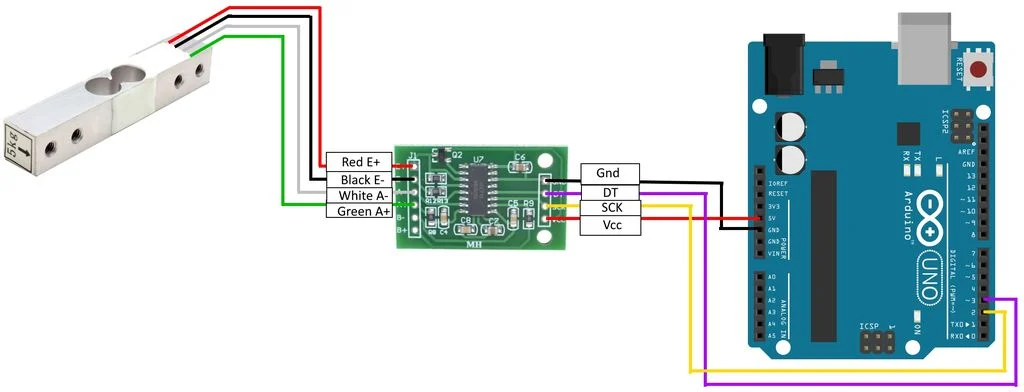
Why it could work:
Limitations:
IR-Based Detection Methods
IR Break-Beam Sensor (Object Detection)
What it is: An infrared LED (transmitter) and an infrared receiver placed opposite each other. The transmitter continuously emits invisible IR light toward the receiver.
How it works:
What it detects: Only presence of an object. Use in this project:Can detect coin insertion event reliably.
Limitation: Does not provide size or denomination information unless combined with additional logic.
IR Timing Analysis (Using Break-Beam Sensor)
What it is: A software-based method using the same IR break-beam sensor. Instead of only detecting interruption, the system measures: How long the beam remains blocked.
How it works: Coin enters → beam blocked → timer starts.
Coin exits → beam restored → timer stops.
Duration of blockage correlates to coin diameter (if insertion speed is controlled).
What it detects: Presence + approximate size.
Use in this project: Could help differentiate denominations based on interruption time.
Limitation: Highly dependent on insertion speed and user handling. Inconsistent movement may reduce reliability.
Inductive Sensing
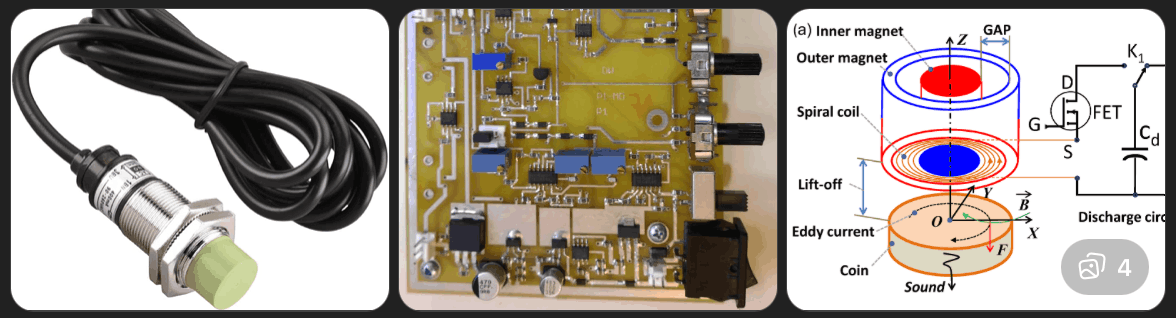
What it is: A coil generates a magnetic field. When a metal object passes through it, the inductance changes depending on material properties.
Why it could work:
Limitations:
This method is technically strong but increases system complexity significantly.
Magnetic Response Detection
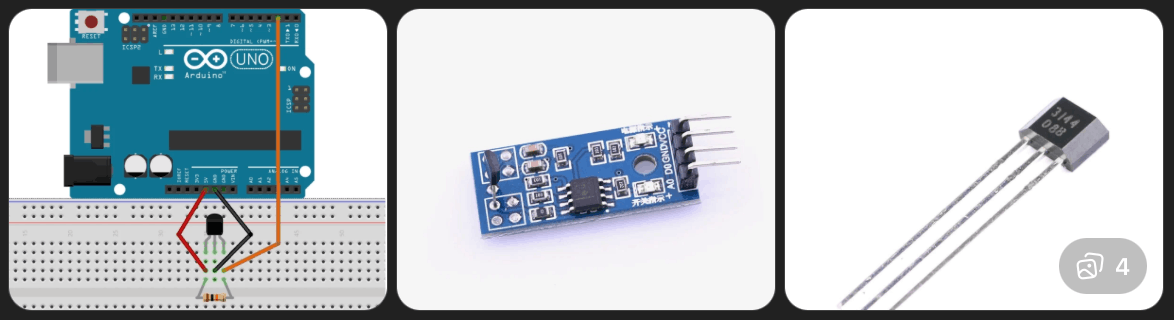
What it is: Using a Hall sensor or magnet to detect ferromagnetic properties of coins.
How It Works in Coin Detection
If a coin has ferromagnetic properties:
Limitations:
This would only work as a supporting parameter.
Insight
No sensing method is perfect on its own. Each approach introduces trade-offs between:
Stage 4 - Learning from Vending Machines & Banks
I researched how real systems handle coin validation.
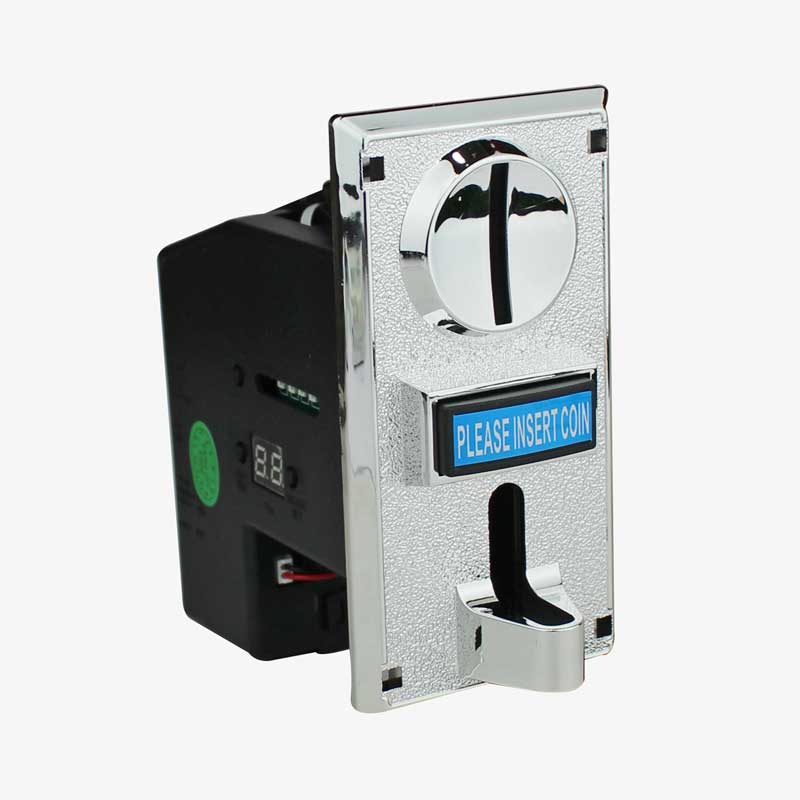
Findings:Industrial systems use multi-parameter validation, combining:
- Diameter
- Thickness
- Electromagnetic signature
- Magnetic properties
- Optical timing
Important realization:Real-world systems never rely on a single parameter. However, their priorities differ:
- Banks focus on authentication and counterfeit detection.
- Vending machines focus on transaction reliability.
- My project focuses on behavioral learning and goal tracking.
This comparison helped me clearly define boundaries.My system does not need:
- Anti-counterfeit security
- High-speed processing
- Industrial-grade validation
It needs:Reliable detection within a controlled environment. This week was about defining scope.
Stage 5 - Project Direction
Inspiration - JumpStart 1st Grade (1995)
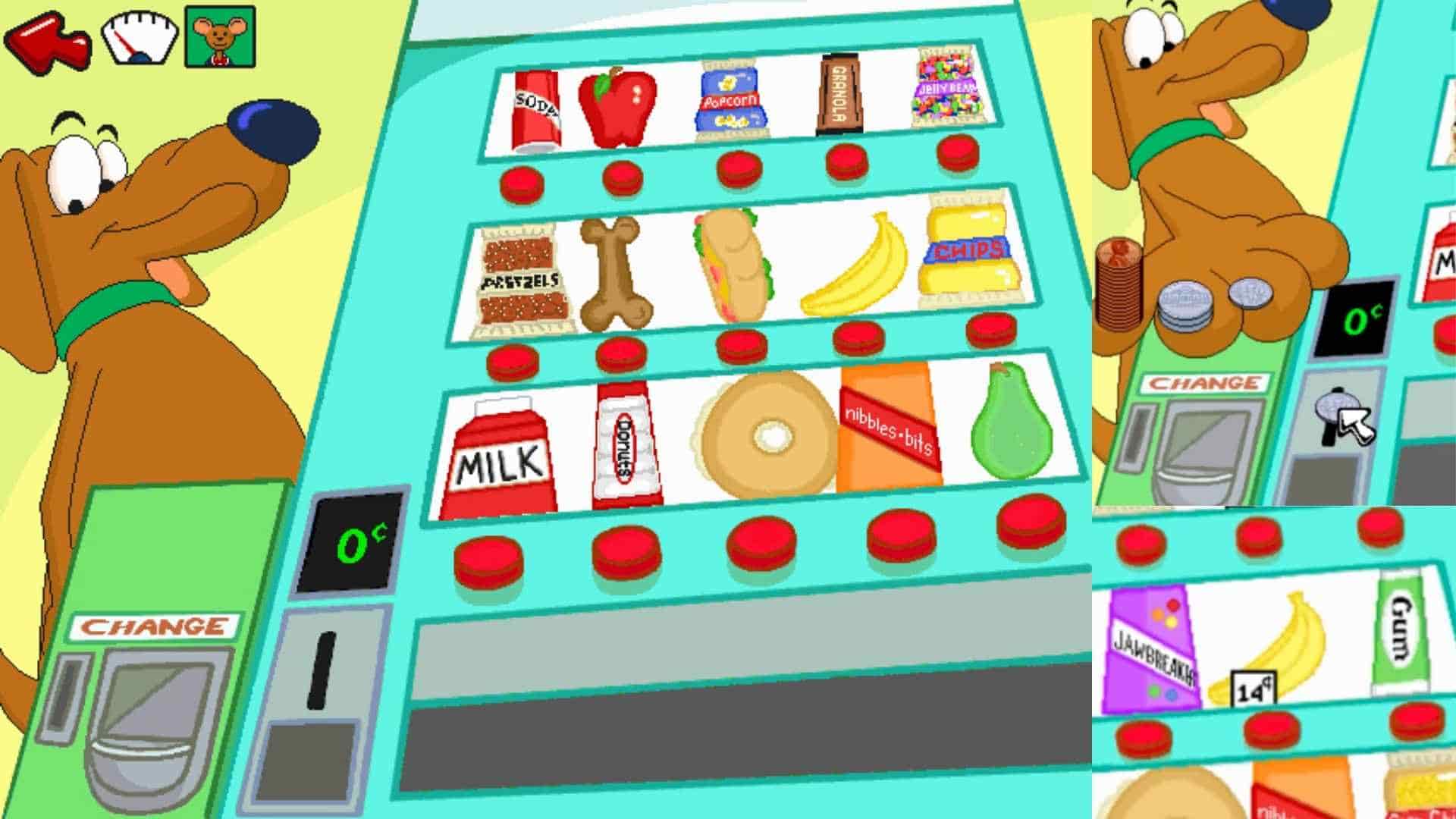
A childhood favourite, a vending machine mini-game where you identify coin denominations, insert them, and watch the machine tally up to the item price. Simple, satisfying, and surprisingly effective at teaching money recognition without feeling like a lesson.
This project borrows that same core loop, with one key difference:
| State | Trigger | Strip Behaviour |
|---|---|---|
| Coin detected | New coin inserted | Breathing pulse (all LEDs) |
| Progress update | After coin is registered | Fill left to right, red → yellow → green |
The NeoPixel strip plays the role the vending machine display did, making progress visible and rewarding, even when the goal is weeks away.